If you enjoy the combination of spicy, savory, and slightly tangy flavors, these kimchi tuna rice balls are worth adding to your recipe collection. They bring together familiar Korean-inspired ingredients in a simple, satisfying snack that doesn’t require complicated techniques or hard-to-find equipment.
The flavor starts with kimchi sautéed in sesame oil until softened and fragrant. Gochujang adds a deep, savory heat, while a little honey (if you choose to use it) rounds out the kimchi’s natural acidity. Canned tuna brings a mild, savory richness that balances the bold flavors without overpowering them.
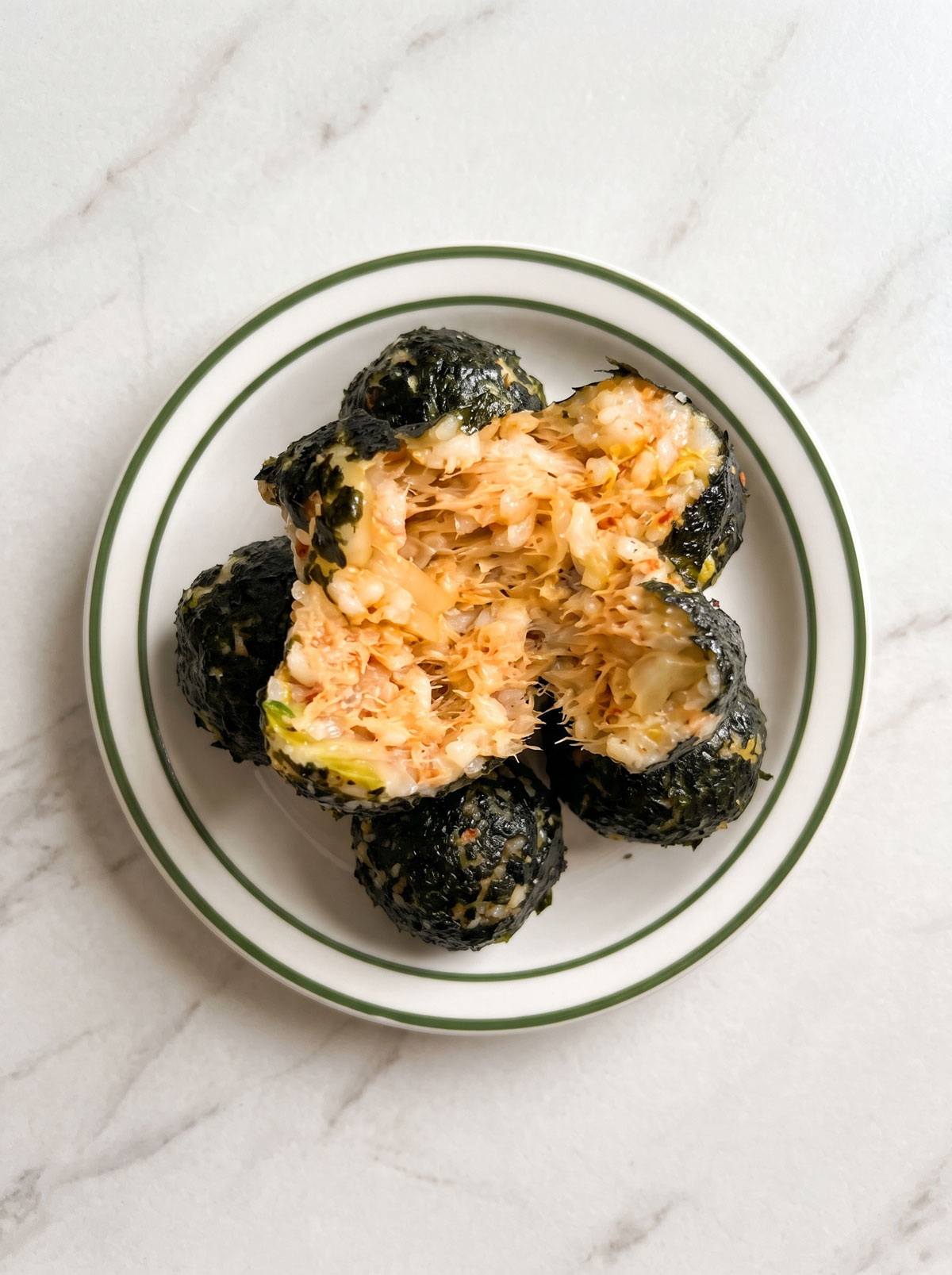
Short-grain rice is the secret to getting these little balls to hold together. Its naturally sticky texture makes shaping easy, while the finely chopped spring onions add freshness and a gentle onion flavor. A generous coating of seasoned seaweed laver finishes each ball with an unmistakably savory taste.
What makes this recipe especially practical is how easily it uses leftover rice and pantry staples. You can prepare the kimchi mixture in one pan, combine everything in a bowl, and shape the rice balls by hand. There’s no complicated cooking once the mixture is assembled.
These are particularly lovely for packed lunches, afternoon snacks, or casual gatherings when you want something more interesting than an ordinary rice dish. Make a batch, serve them fresh, and enjoy the wonderful combination of Korean-inspired flavors.
Love this recipe? Save it to your favorite lunch or snack board on Pinterest so you can find it whenever a kimchi craving strikes!
Why You’ll Love This Recipe
- Big Flavor, Simple Ingredients: Kimchi, gochujang, sesame oil, and tuna create a wonderfully savory combination without requiring a long ingredient list.
- Perfect for Leftover Rice: This recipe gives refrigerated or freshly cooked rice a delicious new purpose.
- Easy to Prepare: The kimchi mixture cooks in just one pan, and the remaining ingredients come together in a single mixing bowl.
- Convenient Individual Portions: Twelve small rice balls are easy to pack for lunch, share as snacks, or serve as part of a casual meal.
- Customizable Heat: Adjust the gochujang to suit your preferred spice level without changing the basic recipe.
Key Ingredients & Why
- Kimchi: The heart of the recipe, kimchi contributes acidity, fermented depth, and a gentle crunch. Cooking it briefly softens the vegetables and concentrates its savory flavor, helping it blend evenly throughout the rice.
- Gochujang: This Korean fermented red chili paste provides more than heat. Its combination of chili, fermented soybean, and grain-based sweetness gives the rice balls their characteristic savory depth.
- Sesame Oil: A little sesame oil carries the aroma of the kimchi as it cooks and adds a distinctive nutty fragrance. It also helps develop a richer flavor before the other ingredients are combined.
- Canned Tuna: Tuna provides savory protein and a mild flavor that works particularly well with the stronger kimchi and gochujang. Draining it thoroughly is important because excess liquid can make the rice mixture difficult to shape.
- Short-Grain Rice: Short-grain rice contains more surface starch than long-grain varieties, giving it the sticky consistency needed to hold the ingredients together. This is essential for making rice balls that stay intact.
- Seasoned Seaweed Laver: Crushed seasoned laver provides a delicate crispness, salty flavor, and extra umami. It also gives the finished rice balls their attractive, dark coating.
Variations & Substitutions
- Creamier Rice Balls: Add 2 tablespoons of mayonnaise to the tuna and rice mixture. This creates a richer, softer filling, although the rice balls may require slightly firmer shaping.
- Adjust the Spice: Reduce the gochujang from 1 tablespoon to 1-2 teaspoons for a milder flavor. For more heat, keep the original amount or add a little extra to taste.
- Add More Freshness: Mix in 1 tablespoon of finely chopped fresh chives or additional spring onions. These complement the fermented kimchi without changing the rice mixture’s structure.
- Use Brown Short-Grain Rice: Replace the cooked white short-grain rice with 3 cups of cooked short-grain brown rice. The texture will be slightly firmer and less sticky, so press the balls firmly when shaping.
- Make It Vegetarian: Replace the 6½ oz of drained tuna with approximately 1 cup of finely crumbled, well-drained firm tofu. The flavor will be milder, so adjust the seasoning to taste.
Equipment Needed
- Medium Frying Pan: Needed to sauté the kimchi and combine it with the sesame oil and seasonings. A nonstick or stainless steel skillet works well.
- Large Mixing Bowl: Provides enough room to combine the rice, tuna, kimchi mixture, and spring onions without crushing the ingredients.
- Measuring Cups and Spoons: Help maintain consistent ingredient proportions, particularly for the gochujang and sesame oil.
- Small Bowl or Shallow Plate: Useful for holding the crushed seasoned seaweed while coating the finished rice balls.
Yield & Exact Sizing
- Total Yield: 12 rice balls.
- Size & Shape: Aim for approximately 1½ inches (3.8 cm) in diameter per ball. Each portion should be large enough to hold comfortably but small enough for easy eating.
- Portioning: Divide the finished mixture into 12 approximately equal portions before shaping.
- Cooking Shrinkage: There is no shrinkage after shaping because the rice balls are not cooked again. Their final size depends on how firmly you press the mixture together.
Ingredients
For the Kimchi Mixture:
½ tbsp sesame oil
1 cup kimchi, finely diced
1 tbsp gochujang
1 tsp honey, optional
For the Rice Balls:
6½ oz canned tuna, drained
2 spring onions, finely sliced
3 cups cooked short-grain rice
Salt and black pepper, to taste
For the Coating:
1 cup seasoned seaweed laver, crushed
Instructions
1. Sauté the kimchi. Heat the sesame oil in a medium frying pan over medium heat. Add the finely diced kimchi and cook for several minutes, stirring occasionally, until softened and most of its excess moisture has evaporated.
2. Add the seasonings. Stir in the gochujang and optional honey. Continue cooking for 1-2 minutes, allowing the seasonings to combine with the kimchi. Remove the pan from the heat and let the mixture cool slightly.
3. Combine the rice ball ingredients. Place the cooked short-grain rice in a large mixing bowl. Add the drained tuna, sliced spring onions, and cooled kimchi mixture. Season with salt and black pepper, then mix thoroughly until the ingredients are evenly distributed.
4. Shape the rice balls. Divide the mixture into 12 equal portions. Using clean, slightly damp hands, gently press and roll each portion into a compact ball approximately 1½ inches in diameter.
5. Coat with seaweed. Spread the crushed seasoned seaweed in a shallow dish. Roll each rice ball through the seaweed, gently pressing the coating onto the surface until evenly covered.
6. Serve. Arrange the finished rice balls on a serving plate and enjoy immediately while the rice is still pleasantly warm.
Visual & Tactile Cues
Stage 1: Cooking the Kimchi
- Appearance: The kimchi should look slightly darker and softer than when it first enters the pan.
- Texture: Most of the watery liquid should have evaporated, leaving moist but not soupy kimchi.
- Aroma: You should notice a fragrant combination of toasted sesame and tangy fermented cabbage.
Stage 2: Mixing the Rice
- Consistency: The mixture should look evenly speckled with kimchi, tuna, and spring onions.
- Texture: The rice should be moist and sticky enough to hold together when gently pressed.
- Moisture: There should be no visible pool of liquid at the bottom of the bowl.
Stage 3: Shaping the Rice Balls
- Appearance: Each portion should form a compact, rounded shape without large cracks.
- Touch: The rice should feel slightly tacky but should not fall apart when gently lifted.
- Consistency: If a ball crumbles, press it together again gently rather than adding unnecessary liquid.
Stage 4: Applying the Seaweed
- Appearance: The surface should be evenly covered with small pieces of dark seasoned seaweed.
- Texture: The coating should cling to the rice rather than falling away immediately.
- Finish: The completed rice balls should have a neat, rounded shape with no exposed areas that are excessively loose.
Cooking Notes (Pro Tips)
- Drain the Tuna Well: Excess liquid from canned tuna can make the rice mixture too wet. Drain it thoroughly before adding it to the bowl.
- Avoid Overcooking the Kimchi: The goal is to soften the kimchi and remove excess moisture, not cook it until completely dry. Leaving a little moisture helps the flavors blend into the rice.
- Let the Kimchi Mixture Cool Slightly: Adding piping-hot kimchi directly to the rice can make the mixture overly soft. A short cooling period makes shaping easier.
- Use Damp Hands: Lightly wetting your hands prevents sticky rice from clinging to your fingers and helps create smooth, evenly shaped balls.
Storage & Reheating Guide
- Refrigerator Storage: Place leftover rice balls in an airtight container and refrigerate promptly. Enjoy within 2 days, following the original recipe’s storage guidance.
- Freezer Storage: Freezing is not recommended for the best texture. Cooked short-grain rice can become firmer or grainier after freezing and thawing, while the seaweed coating may lose its texture.
- Best Way to Enjoy Leftovers: These rice balls are best enjoyed fresh. If refrigerated, allow them to sit briefly at room temperature before eating, but do not leave them unrefrigerated for more than 2 hours.
- Microwave Reheating: If you prefer them warm, remove the seaweed coating if possible and microwave the rice balls in short intervals until heated thoroughly. The rice will soften, but the seaweed will lose its crisp texture.
- Food Safety: Refrigerate cooked rice dishes within 2 hours of preparation. Avoid repeatedly warming and cooling the same portion.
Serving Suggestions
These kimchi tuna rice balls are ideal for a casual Korean-inspired lunch, a light afternoon snack, or a simple sharing platter. Their savory, spicy flavor pairs particularly well with refreshing sides and creamy dips.
- Cucumber Salad: Thinly sliced cucumber tossed with rice vinegar and a little sesame oil provides a crisp, refreshing contrast to the spicy kimchi.
- Korean-Style Pickled Radish: Sweet-and-tangy pickled radish adds brightness and crunch while balancing the fermented flavors.
- Japanese-Style Mayonnaise Dip: Serve with a small bowl of creamy mayonnaise mixed with a little lemon juice. Its richness complements the tuna and softens the gochujang heat.
- Miso Soup: A warm bowl of mild miso soup makes these rice balls feel like a more complete lunch without requiring much extra preparation.
Nutrition Facts
Estimated Nutrition per Serving
Approximate values per 1 rice ball, based on 12 rice balls.
- Calories: 100 kcal
- Fat: 2 g
- Carb: 17 g
- Protein: 5 g
Disclaimer: This nutritional information is an estimate provided for informational purposes only. Actual values vary depending on the brands of tuna, kimchi, gochujang, rice, and seasoned seaweed used.
Recipe Science
Kimchi tuna rice balls are made by combining cooked short-grain rice with sautéed kimchi, canned tuna, spring onions, and gochujang. The kimchi is first cooked in sesame oil to soften its vegetable structure and reduce excess moisture. Once cooled slightly, it is mixed with the remaining ingredients before being shaped into individual portions and coated with seasoned seaweed. This method produces a compact rice snack without requiring additional cooking after shaping.
The choice of short-grain rice is central to the recipe’s structure. Its relatively high amylopectin content contributes to stickiness, allowing individual grains to adhere when pressed together. Cooking the kimchi also concentrates its flavor as moisture evaporates, while gochujang contributes fermented savory compounds and chili heat. Tuna adds protein and a mild savory quality, and the seaweed coating contributes additional umami through naturally occurring glutamate compounds.
The preparation method is practical because the ingredients require little additional processing once the rice is cooked. Sautéing the kimchi in a single pan develops flavor before everything is combined in one mixing bowl. Portioning the mixture into consistent balls also makes the recipe convenient for packed lunches and snacks. Because cooked rice is perishable, prompt refrigeration and an airtight container are important for maintaining food quality and reducing food-safety risks.
From a nutritional perspective, the rice provides most of the carbohydrates, while tuna contributes protein and sesame oil supplies fat. Sodium is an important consideration because seasoned seaweed, kimchi, gochujang, and canned tuna can all contribute substantial amounts. Depending on the brands and quantities used, sodium may exceed 20% of the FDA Daily Value of 2,300 mg per serving. Using lower-sodium tuna and seaweed, when available, and adjusting added salt can help reduce the overall sodium content. Added sugar and saturated fat are generally less prominent, although honey and mayonnaise variations will change the nutritional profile.
Frequently Asked Questions
– Can I make these rice balls ahead of time? Yes. You can prepare the kimchi mixture in advance and refrigerate it separately. For the best texture, combine it with the rice and shape the balls closer to serving time.
– Can I use leftover refrigerated rice? Yes. Short-grain rice that has been refrigerated properly works well. Warm it gently before mixing if it has become firm, and ensure it is heated thoroughly.
– What if my rice balls keep falling apart? Check whether you are using short-grain rice and whether the tuna has been drained properly. Press the mixture firmly enough to hold together, and avoid adding too much liquid.
– Can I make these without gochujang? Gochujang provides an important part of the recipe’s signature flavor. Omitting it will produce a milder, less distinctly Korean-inspired result. If necessary, reduce the amount rather than removing it entirely.
– Where can I find Korean ingredients outside Korea or the United States? Look for kimchi, gochujang, and seasoned seaweed in Korean grocery stores, Asian supermarkets, or international grocery sections. In Vietnam, these ingredients are also commonly available through Korean supermarkets and larger online grocery retailers. Check the ingredient labels because seasoned seaweed products can vary in saltiness.
– Can I use another type of canned fish? You can use drained canned salmon in the same approximate quantity as the tuna. The flavor will be richer, but the rice should still hold together when properly mixed and shaped.
– Are these rice balls very spicy? They have a noticeable but adjustable chili flavor. The original tablespoon of gochujang provides a savory heat, while the optional honey adds a little sweetness to balance the kimchi.
Conclusion
These kimchi tuna rice balls are a lovely reminder that a handful of everyday ingredients can come together to make something genuinely satisfying. Whether you’re preparing them for lunch, using up leftover rice, or making a snack to share, don’t be afraid to adjust the seasoning and make the recipe your own.
I’d love to know: Do you prefer your rice balls with extra kimchi, a little mayonnaise, or more gochujang for heat? Share your favorite variation in the comments!
Happy cooking, friend!
Kimchi Tuna Rice Balls
Course: SnackCuisine: KoreanDifficulty: Easy12
rice balls10
minutes10
minutes100
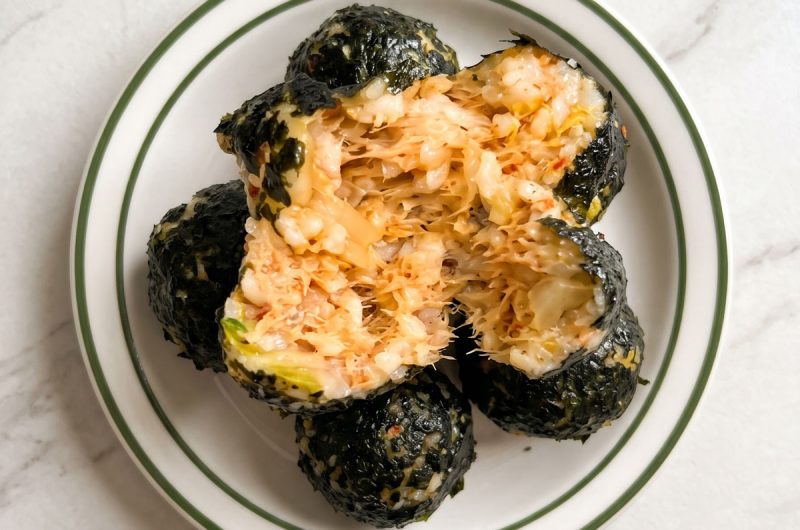
kcalThese kimchi tuna rice balls combine tender short-grain rice, savory tuna, tangy kimchi, and spicy gochujang for a flavorful, satisfying bite. Each ball is coated in seasoned seaweed for an extra layer of savory crunch, making them a practical snack or an easy lunch.
Ingredients
- For the Kimchi Mixture:
½ tbsp sesame oil
1 cup kimchi, finely diced
1 tbsp gochujang
1 tsp honey, optional
For the Rice Balls:
6½ oz canned tuna, drained
2 spring onions, finely sliced
3 cups cooked short-grain rice
Salt and black pepper, to taste
- For the Coating:
1 cup seasoned seaweed laver, crushed
Directions
- Sauté the kimchi. Heat the sesame oil in a medium frying pan over medium heat. Add the finely diced kimchi and cook for several minutes, stirring occasionally, until softened and most of its excess moisture has evaporated.
- Add the seasonings. Stir in the gochujang and optional honey. Continue cooking for 1-2 minutes, allowing the seasonings to combine with the kimchi. Remove the pan from the heat and let the mixture cool slightly.
- Combine the rice ball ingredients. Place the cooked short-grain rice in a large mixing bowl. Add the drained tuna, sliced spring onions, and cooled kimchi mixture. Season with salt and black pepper, then mix thoroughly until the ingredients are evenly distributed.
- Shape the rice balls. Divide the mixture into 12 equal portions. Using clean, slightly damp hands, gently press and roll each portion into a compact ball approximately 1½ inches in diameter.
- Coat with seaweed. Spread the crushed seasoned seaweed in a shallow dish. Roll each rice ball through the seaweed, gently pressing the coating onto the surface until evenly covered.
- Serve. Arrange the finished rice balls on a serving plate and enjoy immediately while the rice is still pleasantly warm.