Castella Cake is a wonderfully delicate Japanese-style sponge with a moist, tender crumb and a gently sweet flavor. The combination of warm vegetable oil, cake flour, milk, eggs, vanilla, and lemon juice creates a cake that is light without tasting dry, while the water-bath baking method helps keep the center soft and even.
The texture is the real reason this recipe is a keeper. The whipped egg whites provide the lift, while the yolks and milk contribute richness and moisture. A little lemon juice and vanilla help balance the egg flavor, giving each slice a clean, lightly fragrant finish. It is especially good served plain alongside tea or coffee, when there is nothing to distract from that soft, springy crumb.
This is a lovely choice when you want something elegant without frosting, layers, or complicated decorating. Cut it into thick rectangular pieces for afternoon tea, brunch, family gatherings, or a simple dessert. For an extra-special presentation, add a very light dusting of powdered sugar or a small drizzle of honey just before serving.
Why You’ll Love This Recipe
- Soft, Moist Crumb: The combination of whipped egg whites, milk, egg yolks, and water-bath baking creates a tender texture.
- No Frosting Required: The cake is flavorful and elegant enough to serve plain.
- Lightly Sweet: The restrained sweetness makes it especially pleasant with tea or coffee.
- Simple Ingredients: The recipe relies on familiar baking staples rather than specialty flavorings.
- Elegant for Guests: Thick rectangular slices give this simple sponge cake a polished presentation.
Ingredients
Cake Batter
- 80 g vegetable oil
- 115.5 g cake flour, low-protein, about 7% to 9% protein
- 16.5 g cornstarch
- 99 g milk
- 8 large egg yolks
- 2 tbsp vanilla extract
Meringue
- 8 large egg whites
- 99 g granulated sugar
- 2 g salt
- 2 tbsp lemon juice
Instructions
- Prepare the eggs and oven. Preheat the oven to 150°C / 302°F. Separate the eggs, placing the whites in a completely clean, dry bowl. Refrigerate the egg whites while you prepare the batter. Make sure no yolk gets into the whites, as even a small amount can interfere with whipping.
- Warm the oil. Heat the vegetable oil to 70°C / 158°F over low to medium-low heat. Transfer it to a clean, dry mixing bowl. If you do not have a thermometer, warm the oil gently for about 60 seconds; do not let it become hot enough to smoke.
- Build the batter. Whisk the cake flour, cornstarch, and salt into the warm oil until no dry spots remain. Add the milk and whisk gently until smooth. Add the egg yolks and vanilla, then mix just until the batter is uniform. Do not overmix.
- Make the meringue. Remove the chilled egg whites from the refrigerator. Add the lemon juice and granulated sugar. Using a hand mixer on medium-high speed, beat until the meringue is glossy and forms soft peaks. It should look smooth and hold its shape while remaining soft rather than stiff.
- Lighten the batter. Add a small scoop of the whipped egg whites to the yolk batter. Fold gently with a spatula until just incorporated. This loosens the batter and makes the remaining meringue easier to incorporate.
- Fold in the remaining egg whites. Add the loosened batter to the bowl of meringue. Use a spatula to gently cut through and fold the mixtures together. Stop as soon as the batter is evenly combined. Avoid stirring or vigorous mixing, which can deflate the air bubbles.
- Prepare the pan. Line a 24 × 24 × 8 cm square springform pan with parchment paper. Pour in the batter and smooth the surface. Leave enough room at the top for the cake to rise during baking.
- Set up the water bath. Wrap the bottom of the springform pan securely with aluminum foil to help prevent water from entering. Place about 1 cm of room-temperature water in a baking tray. For additional protection, place a wire rack inside the baking tray and set the cake pan on top so the pan does not sit directly in the water.
- Bake. Bake at 150°C / 302°F for about 65 minutes. Begin checking toward the end of the baking time. Insert a toothpick into the center; it should come out clean when the cake is fully baked. If wet batter remains, continue baking until set.
- Cool properly. Remove the finished cake from the oven and take it out of the springform pan. Transfer it to a wire rack and allow it to cool completely. Cooling the cake outside the pan helps prevent excess moisture from accumulating around the sides and bottom.
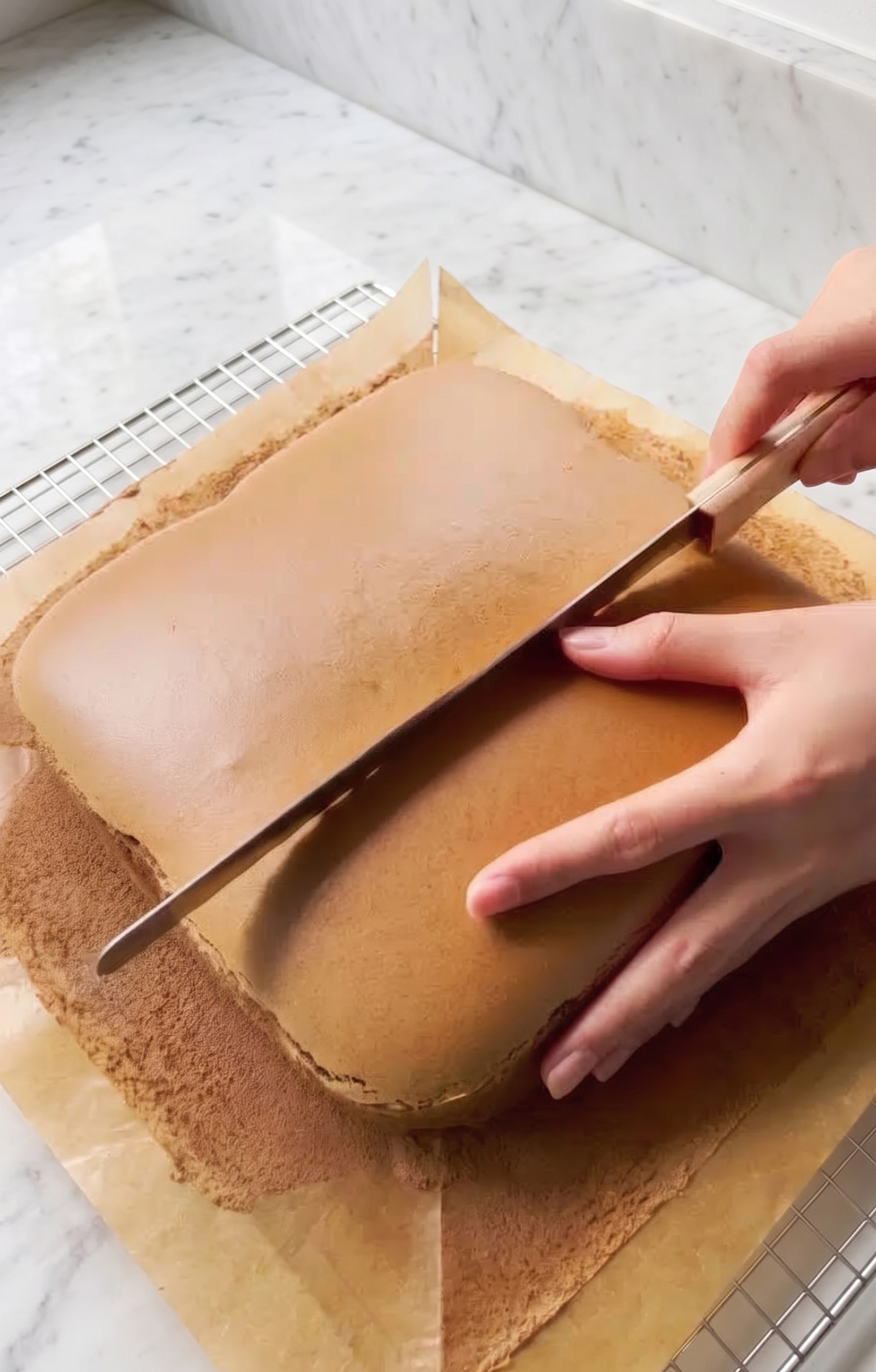
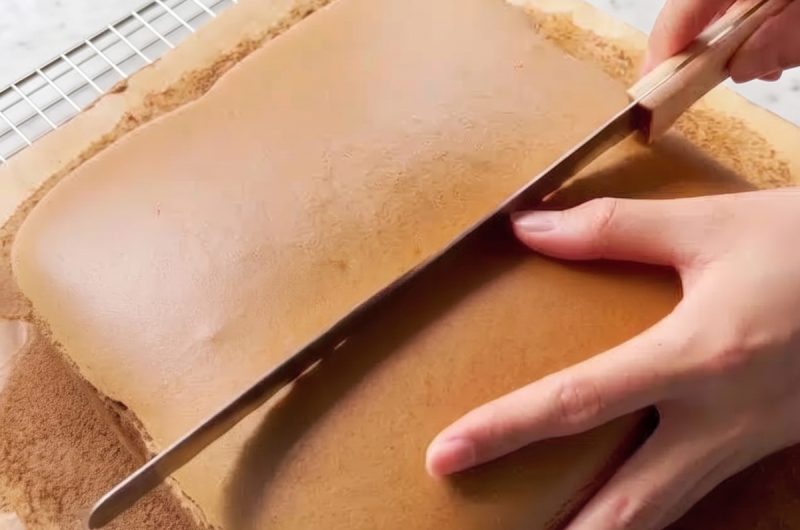
- Slice and serve. Once completely cool, cut the cake into 12 thick rectangular pieces. Serve plain, or finish with a light dusting of powdered sugar or a small drizzle of honey if desired.
Cooking Notes
Clean equipment matters: The egg-white bowl and beaters must be completely dry and free of grease. Any yolk contamination can prevent the whites from whipping properly.
Do not overheat the oil: The oil should reach 70°C / 158°F, not a higher temperature. Excessively hot oil can make the batter unusually thick.
Fold, do not stir: Gentle folding preserves the air incorporated into the meringue. Overmixing can cause the cake to lose volume and shrink after baking.
Use the correct flour: Cake flour here means a low-protein flour, generally about 7% to 9% protein. Do not substitute self-rising flour.
Protect the cake from water: If using a springform pan, wrap the bottom thoroughly with aluminum foil. Placing the pan on a rack above the water provides additional protection.
Watch the water level: Because the cake bakes for about an hour, make sure the water bath does not evaporate completely before the cake is finished.
Cooling is important: Remove the cake from the pan after baking and cool it on a wire rack rather than leaving it in the pan, where trapped moisture can make the cake overly wet.
Nutrition
Estimated nutrition per serving; 12 servings
- Calories: 187 kcal
- Fat: 10 g
- Carbs: 18 g
- Protein: 6 g
Additional estimated values per serving:
- Saturated Fat: 2 g
- Cholesterol: 130 mg
- Sodium: 66 mg
- Sugars: 9 g
FAQ
- Can I use all-purpose flour instead of cake flour? The recipe specifically calls for low-protein cake flour, approximately 7% to 9% protein. All-purpose flour may produce a different, potentially firmer texture.
- Why did my cake shrink after baking? The most likely issue within this method is loss of air from the meringue. Fold the egg whites gently and stop mixing as soon as the batter is evenly incorporated.
- Why won’t my egg whites whip? Check that the bowl and beaters are completely clean and dry and that no egg yolk has entered the whites. Even a small amount of yolk can interfere with whipping.
- Can I skip the water bath? The supplied method uses a water bath to support gentle, even baking and moisture retention. For the intended texture, follow the water-bath method.
- How do I know when the cake is done? Insert a toothpick into the center. It should come out clean. If wet batter remains, continue baking until the center is fully set.
Moist and Tender Castella Cake
Course: DessertsCuisine: JapaneseDifficulty: Medium12
servings25
minutes1
hour5
minutes187
kcalA soft, moist sponge cake made with whipped eggs, cake flour, milk, vanilla, and lemon juice, then gently baked in a water bath for a tender crumb.
Ingredients
- Cake Batter
80 g vegetable oil
115.5 g cake flour, low-protein, about 7% to 9% protein
16.5 g cornstarch
99 g milk
8 large egg yolks
2 tbsp vanilla extract
- Meringue
8 large egg whites
99 g granulated sugar
2 g salt
2 tbsp lemon juice
Directions
- Prepare the eggs and oven. Preheat the oven to 150°C / 302°F. Separate the eggs, placing the whites in a completely clean, dry bowl. Refrigerate the egg whites while you prepare the batter. Make sure no yolk gets into the whites, as even a small amount can interfere with whipping.
- Warm the oil. Heat the vegetable oil to 70°C / 158°F over low to medium-low heat. Transfer it to a clean, dry mixing bowl. If you do not have a thermometer, warm the oil gently for about 60 seconds; do not let it become hot enough to smoke.
- Build the batter. Whisk the cake flour, cornstarch, and salt into the warm oil until no dry spots remain. Add the milk and whisk gently until smooth. Add the egg yolks and vanilla, then mix just until the batter is uniform. Do not overmix.
- Make the meringue. Remove the chilled egg whites from the refrigerator. Add the lemon juice and granulated sugar. Using a hand mixer on medium-high speed, beat until the meringue is glossy and forms soft peaks. It should look smooth and hold its shape while remaining soft rather than stiff.
- Lighten the batter. Add a small scoop of the whipped egg whites to the yolk batter. Fold gently with a spatula until just incorporated. This loosens the batter and makes the remaining meringue easier to incorporate.
- Fold in the remaining egg whites. Add the loosened batter to the bowl of meringue. Use a spatula to gently cut through and fold the mixtures together. Stop as soon as the batter is evenly combined. Avoid stirring or vigorous mixing, which can deflate the air bubbles.
- Prepare the pan. Line a 24 × 24 × 8 cm square springform pan with parchment paper. Pour in the batter and smooth the surface. Leave enough room at the top for the cake to rise during baking.
- Set up the water bath. Wrap the bottom of the springform pan securely with aluminum foil to help prevent water from entering. Place about 1 cm of room-temperature water in a baking tray. For additional protection, place a wire rack inside the baking tray and set the cake pan on top so the pan does not sit directly in the water.
- Bake. Bake at 150°C / 302°F for about 65 minutes. Begin checking toward the end of the baking time. Insert a toothpick into the center; it should come out clean when the cake is fully baked. If wet batter remains, continue baking until set.
- Cool properly. Remove the finished cake from the oven and take it out of the springform pan. Transfer it to a wire rack and allow it to cool completely. Cooling the cake outside the pan helps prevent excess moisture from accumulating around the sides and bottom.
- Slice and serve. Once completely cool, cut the cake into 12 thick rectangular pieces. Serve plain, or finish with a light dusting of powdered sugar or a small drizzle of honey if desired.